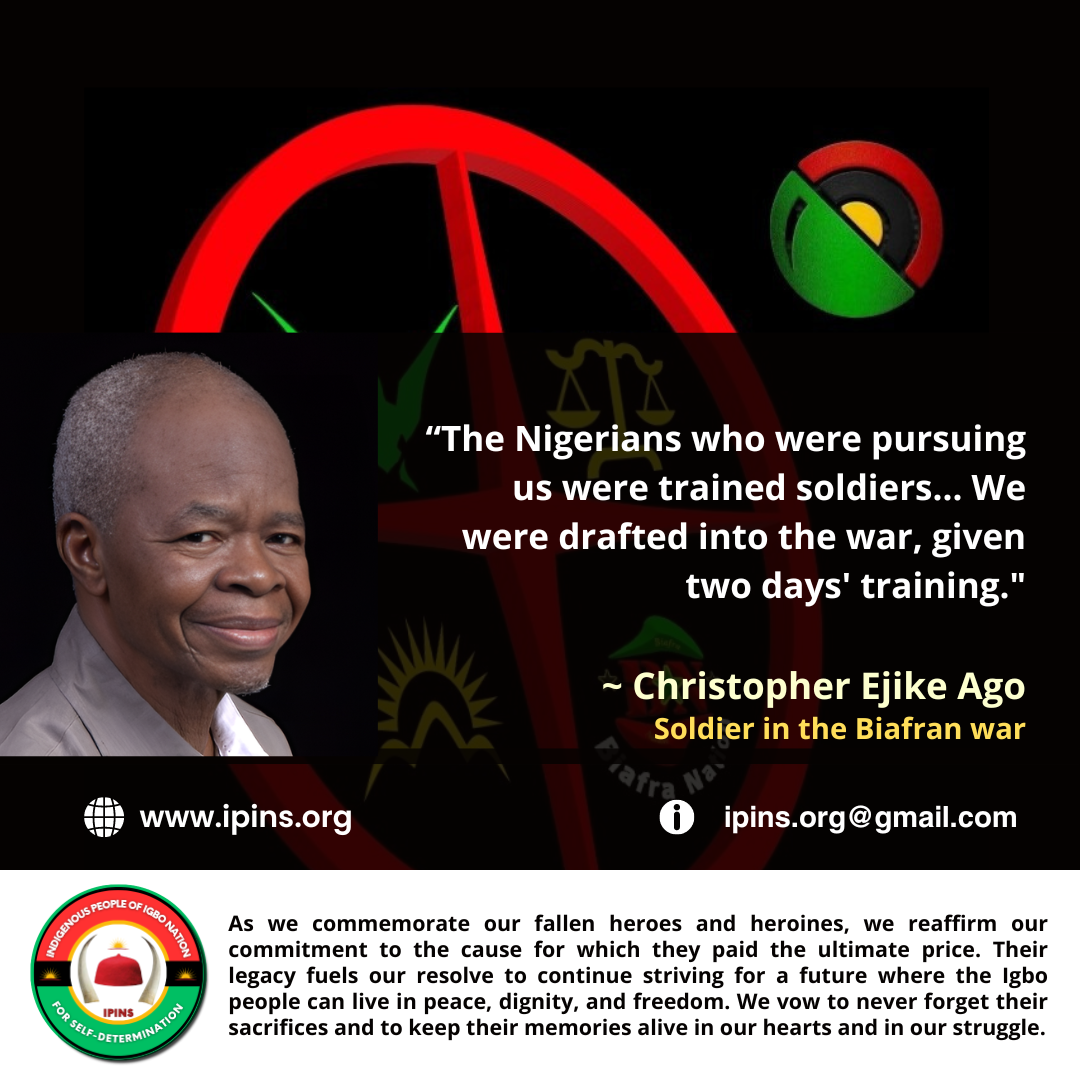
'We thought we were magicians' ~ Christopher Ejike Ago, soldier
Originally Published By BBC
He had just finished grammar school and started training as a veterinary assistant at the University of Nigeria, Nsukka (UNN), in south-eastern Nigeria, when the civil war began.
Almost every student he knew became part of the war effort.
He joined the Biafran army and was assigned to the signal unit, whose responsibilities included “active intelligence and eavesdropping on the Nigerian military”.
“We thought we were magicians,” said Mr Ago.
“The Nigerians who were pursuing us were trained soldiers. We were not. We were drafted into the war, given two days’ training.
“Plus the fact that we were hungry. Some of us, our skin was getting rotten. Nobody can fight a war like that.”
In January 1966, some senior Nigerian army officers, mostly of the Igbo ethnic group, assassinated key politicians during a coup in the West African state.
Those killed included Ahmadu Bello, a revered leader in the north.
This led to months of massacres against the Igbo living in the north. Tens of thousands were killed while about a million fled to what was then known as the Eastern Region.
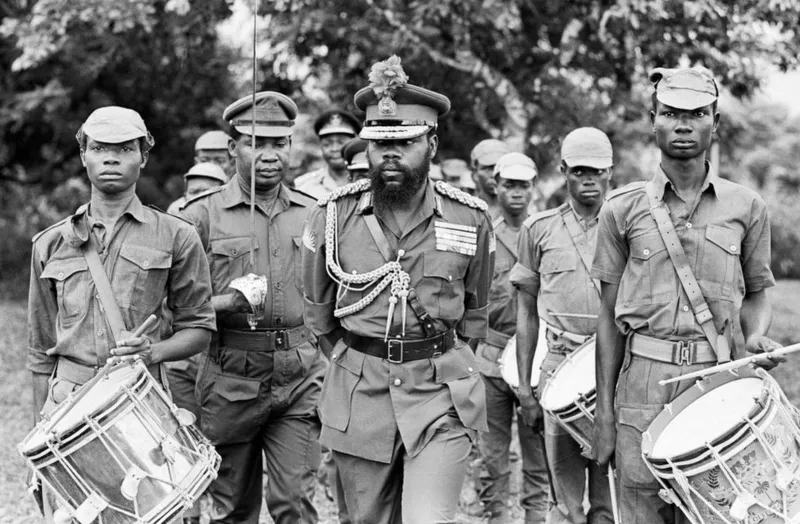
These events sparked the decision to secede, spearheaded by Ojukwu, who was then the military governor of the Eastern Region.
In the months preceding the war, Ojukwu often visited UNN, the only university in south-eastern Nigeria at the time, to meet with students and prepare them for secession.
Mr Ago looked forward to these visits, and joined the crowd who gathered at the university’s Freedom Square.
“Once his helicopter touched down, everybody went there and, practically, school shut down.
“He had this incredible sense of humour. He spiked everybody up and we formed songs and were singing and enjoying ourselves.”
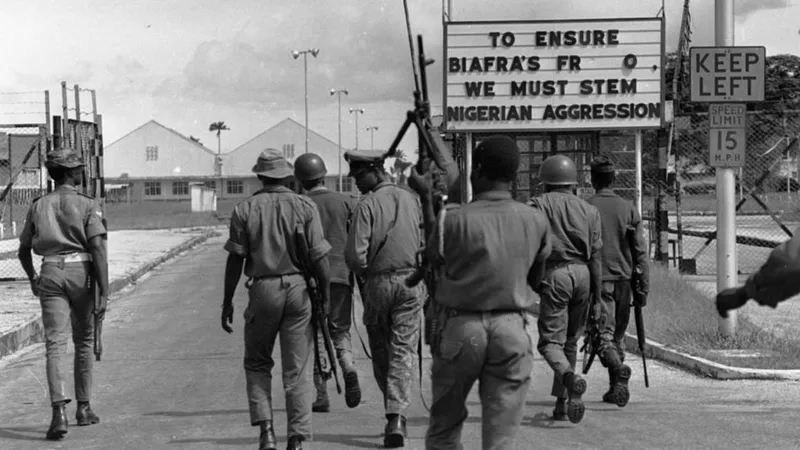
In the first year of the war, the Nigerian government captured the coastal city of Port Harcourt and imposed a blockade, which cut food supplies to Biafra.
Mr Ago remembers the overpowering hunger that often forced Biafran soldiers to catch and eat mice. He also remembers the last year of the war when his unit was continuously on the move, fleeing the advancing Nigerian army.
“Somewhere in the middle of the war,” he said, “the Biafrans made some dramatic successes that gave us hope that we might hold the Nigerians until at least some help from outside came.”
By late 1969, all hope was lost.
Mr Ago left the army and went in search of his family, whom he had not heard from in more than two years.
He collected his portion from an allocation of raw rice to his unit, then set off towards the village of a relative, where he suspected his parents and siblings would be holed up.
“I had to carry the rice while starving myself, carrying it across rivers and forests until I found them,” he said.
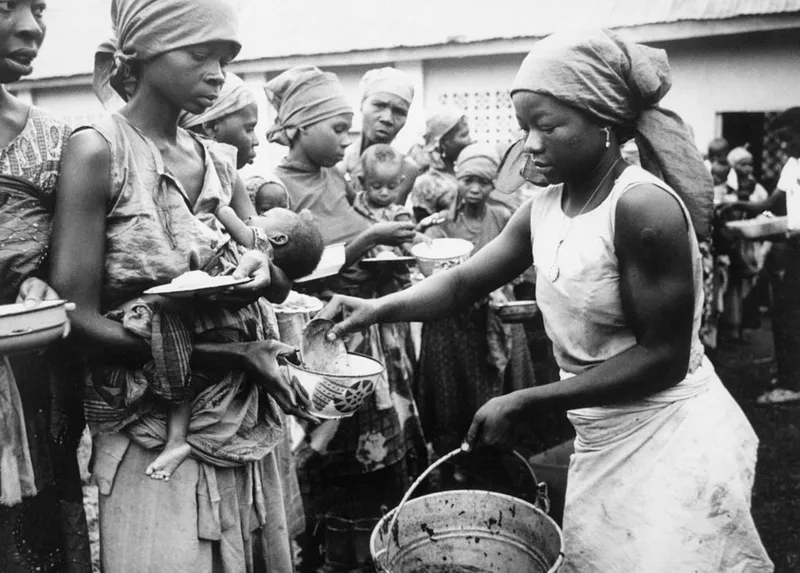
Many of his friends and classmates had died at the battlefront. But his family was delighted to see that the son and brother they assumed dead was alive. And they were glad that he had turned up with food.
Hunger killed more Biafrans than bullets and bombs.
When the university was reopened a few months after the war ended, Mr Ago returned to UNN, eventually graduating with a degree in plant and soil science.
“I think we would have done better if we had handled it with a little bit more intelligence,” said Mr Ago. “I think now that Ojukwu… thought he was Jesus Christ.
“He thought he could do magic. If he had slowed down and allowed some people who were with him to advise him properly, we would have come out better than we did.”