
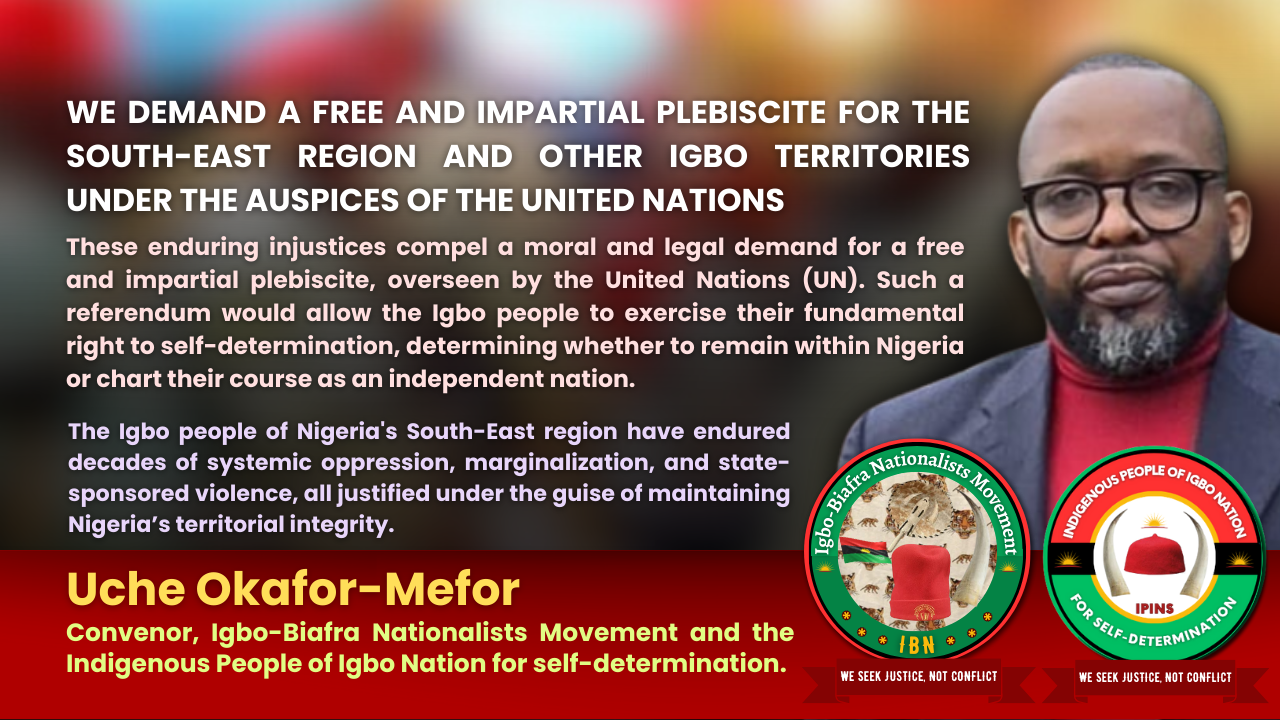
Originally Published by Vanguard
The Montevideo Convention on the Rights and Duties of States (1933) sets forth four essential criteria for statehood under international law: a permanent population, a defined territory, an effective government, and the capacity to enter into relations with other states. The South-East region of Nigeria, home to the Igbo-Biafra people, meets all these criteria, underscoring its viability for independent statehood. Below is an in-depth exploration of how the South-East satisfies these criteria and why they form the foundation of its pursuit for self-determination and independence.
1. A Permanent Population
What This Means:
A state must have a permanent population that constitutes a stable community with shared identity, values, and interests. This population must also have the capacity to participate in the state’s governance and development.

Application to the South-East:
• Demographic Strength: The South-East region has a large, stable, and cohesive population. The Igbo ethnic group, which forms the majority in this region, is one of the largest ethnic groups in Africa, with tens of millions residing in the South-East and millions more in the diaspora.
• Cultural Unity: The Igbo-Biafra population shares a strong sense of identity, language, and cultural values, fostering unity and collective purpose. This homogeneity minimises internal ethnic or sectarian divisions, which are often challenges in multi-ethnic states.
• Skilled Population: The South-East boasts high literacy and education rates, with a significant proportion of its population skilled in commerce, engineering, medicine, and other professions. These attributes create a strong foundation for governance, economic development, and nation-building.
Why It Matters:
A permanent population is the cornerstone of statehood. The Igbo-Biafra people’s shared identity and commitment to development make them a stable and cohesive community, ready to function as citizens of an independent state.
2. A Defined Territory
What This Means:
A state must have clearly defined borders within which it exercises sovereignty. These borders establish the state’s geographical jurisdiction and its ability to manage resources, enforce laws, and protect its population.
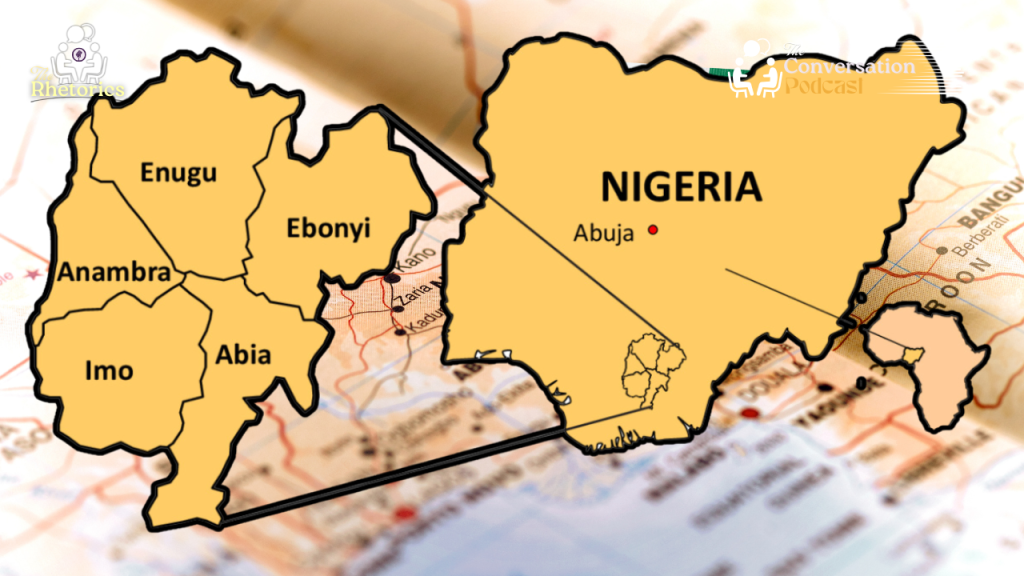
Application to the South-East:
• Geographic Boundaries: The South-East is composed of five Nigerian states—Abia, Anambra, Ebonyi, Enugu, and Imo—forming a contiguous territory with well-defined borders.
• Strategic Access to the Atlantic Ocean: Parts of the South-East, particularly Abia and Imo, have coastal areas that provide access to maritime trade routes. This strategic location enhances the region’s ability to engage in international trade and sustain its economy.
• Rich Natural Resources: The region is endowed with natural resources, including oil, gas, coal, limestone, and arable land. These resources can be effectively managed within its defined borders to support economic growth and self-reliance.
Why It Matters:
Defined territory is critical for establishing sovereignty and jurisdiction. The South-East’s well-defined geographical boundaries and resource endowments ensure that it can function as a self-sustaining state with control over its land and resources.
3. An Effective Government
What This Means:
A state must have a functioning government capable of maintaining order, enforcing laws, and providing essential services to its population. The government must also be able to represent the state in domestic and international affairs.

Application to the South-East:
• Existing Governance Structures: The South-East currently operates under Nigeria’s federal framework, with state and local governments that already manage public services, law enforcement, and development projects. These structures can be adapted for independent governance.
• Igbo Democratic Traditions: Traditional Igbo society is rooted in participatory governance, where decision-making is community-driven and consensus-based. These values align with modern democratic principles, providing a cultural foundation for inclusive and transparent governance.
• Skilled Leadership Pool: The South-East has a wealth of educated and experienced professionals, both within the region and in the diaspora, who can contribute to the establishment and operation of effective governance structures.
• Institutional Capacity Building: Drawing from global best practices, an independent South-East can implement strong anti-corruption measures, decentralised governance models, and robust public institutions to ensure accountability and efficiency.
Why It Matters:
Effective governance ensures the stability and functionality of a state. The South-East’s tradition of self-reliance, coupled with its human capital, positions it to establish a government that serves its people and upholds the rule of law.
4. Capacity to Enter Into Relations With Other States
What This Means:
A state must have the ability to engage in diplomatic and economic relations with other countries. This includes the capacity to negotiate treaties, join international organisations, and participate in global trade.

Application to the South-East:
• Diaspora Networks: The Igbo diaspora, one of the most globally connected African communities, provides an extensive network for fostering international relations. Many members of this diaspora hold influential positions in countries such as the United States, the United Kingdom, and Canada.
• Economic Partnerships: The South-East’s industrial hubs (e.g., Nnewi, Aba) and resource wealth make it an attractive trade partner. An independent South-East state could negotiate trade agreements and attract foreign direct investment (FDI) to sustain its economy.
• Strategic Alliances: The South-East can align itself with regional organisations such as the African Union (AU) and the Economic Community of West African States (ECOWAS) to strengthen its diplomatic and economic ties within Africa.
• Historical and Cultural Ties: The South-East’s historical relationships with various countries during the Biafran War and its globally recognised entrepreneurial spirit make it well-positioned to engage in international diplomacy.
Why It Matters:
The ability to participate in international relations legitimises a state on the global stage. The South-East’s strong diaspora connections, economic potential, and strategic location ensure that it can build and sustain meaningful relationships with other states.
The Montevideo Criteria in the Context of Nigeria’s Failure
While the South-East region meets all four Montevideo criteria, Nigeria’s conduct has further strengthened the case for its independence:
1. Unwillingness to Protect: Nigeria has failed to protect the South-East from systemic human rights abuses, ethnic cleansing, and marginalisation.
2. Blocked Dialogue: Nigeria has consistently blocked meaningful avenues for internal self-determination, leaving remedial secession as the only viable option.
3. Exploitation of Sovereignty: Nigeria hides behind the principle of territorial integrity to justify its failure to uphold the principles of equal rights and justice for the South-East region.
A Viable Path to Independence
In closing, it is our view that the ‘Aburi Accord’ which embodied the confederal arrangement (greater autonomy) or to a lesser extent, regional system is a workable alternative to outright secession or independence. However, since the Nigerian state is unwilling and unable to engage or commit to effective resolution of the grievances to remedy the injustices; have even gone ahead to block all avenues of South-East’s quest to achieve internal self-determination within Nigeria and frustrated all meaningful avenues for dialogue, then remedial secession remains the last resort and the only option left. The implication of this in reality is that the idea of Biafra, that resilient indomitable spirit of justice, equity and fairness shall continue to hound and hunt Nigeria. O yes, no matter how long it takes, the idea and spirit of Biafra shall outlive Nigeria eventually!
The South-East region of Nigeria satisfies all four Montevideo criteria for statehood: it has a permanent population, a defined territory, the capacity for effective governance, and the ability to engage in international relations. Furthermore, its pursuit of independence is justified by Nigeria’s systemic failures, including the exploitation of territorial integrity to perpetuate human rights abuses against the Igbo-Biafra population.
An independent South-East state promises to be economically viable, politically stable, and globally integrated. By fulfilling the Montevideo criteria and addressing its people’s long-standing grievances, the South-East demonstrates that its future lies in self-determination and the creation of a sovereign state that prioritises justice, equality, and prosperity.