Originally Published By Vanguard
The arrest of Simon Ekpa by the Finnish authorities is a pivotal development in the ongoing struggle for self-determination and the quest for justice in the Igbo-Biafran cause. However, it is critical to address the misconceptions and legal realities surrounding this arrest, particularly regarding the Nigerian government’s desire to extradite Simon Ekpa to Nigeria.
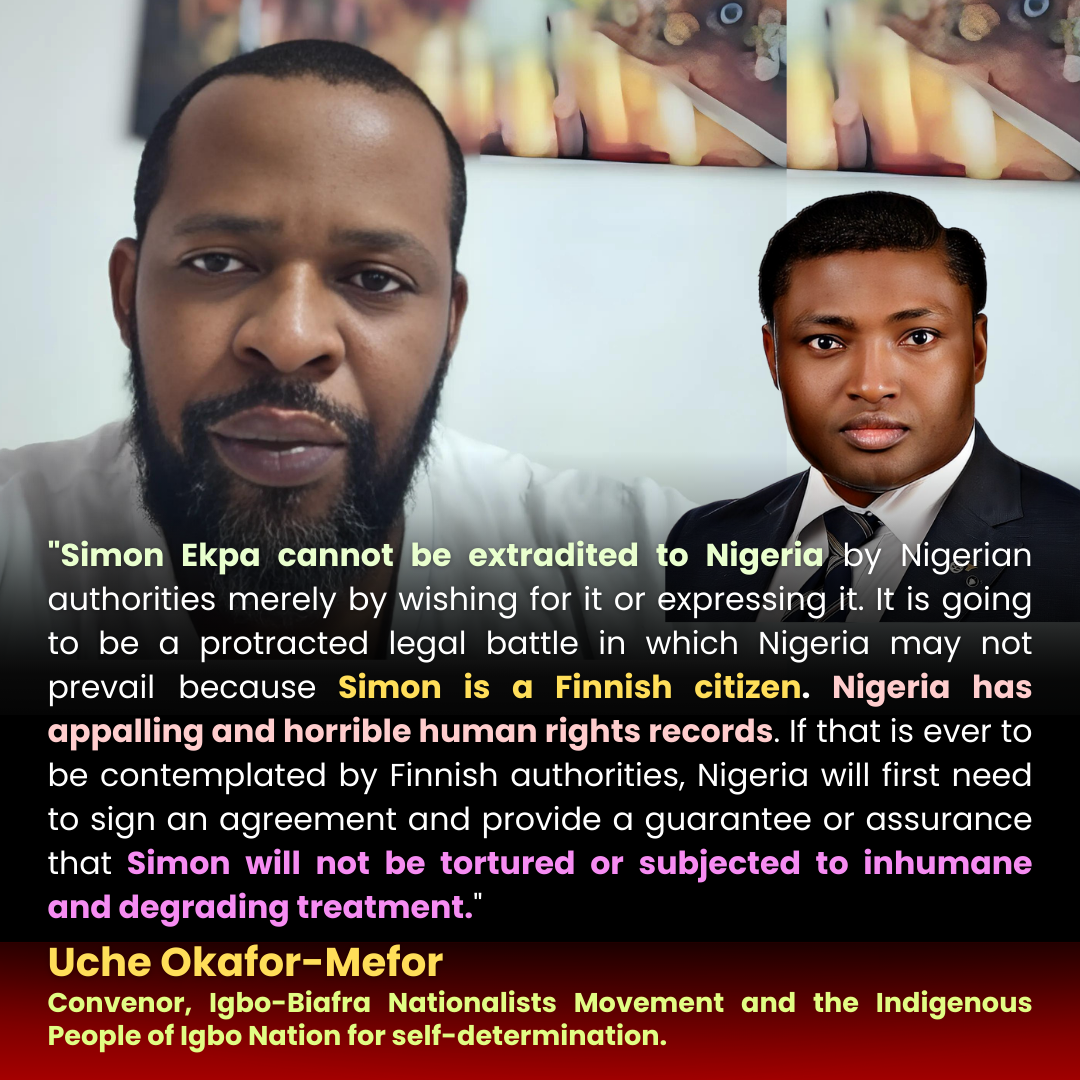
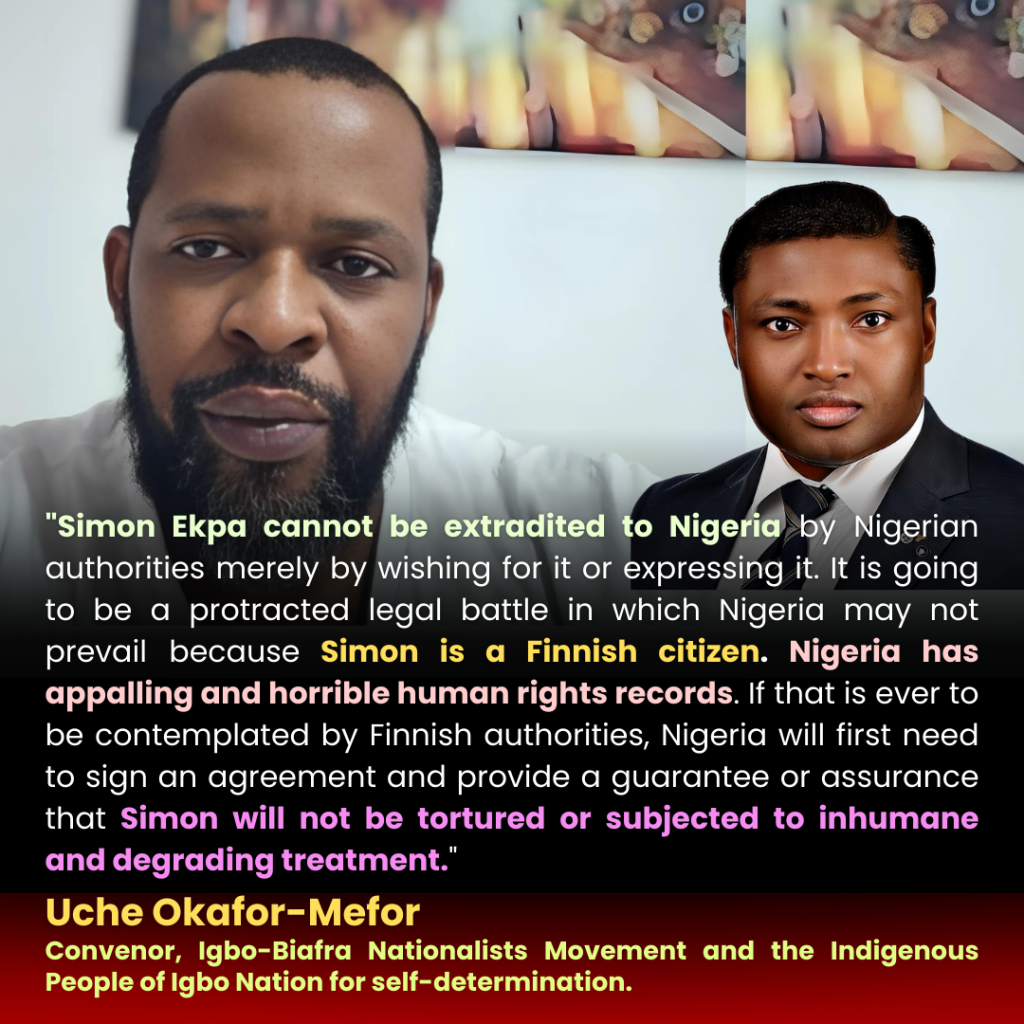
It is important to assert that Simon Ekpa, as a Finnish citizen, can not simply be extradited to Nigeria based on the Nigerian government’s wishes or expressions of intent. Such an extradition process would require navigating complex legal frameworks and ensuring strict adherence to international laws and human rights standards. Nigeria’s appalling and well-documented human rights record poses a significant hurdle in this regard. Any move to extradite Simon Ekpa would necessitate binding agreements and guarantees from Nigeria that he would not be subjected to torture, inhumane, or degrading treatment – assurances that the Nigerian government’s historical conduct calls into serious question.
If a trial were to occur, it is highly likely that Simon Ekpa would face prosecution and, if convicted, serve any resultant sentence in Finland. Finland’s robust legal system, underpinned by its commitment to human rights and justice, would preclude the possibility of extraditing him to a jurisdiction where his safety and rights could be compromised. This is a reality that must be accepted by all parties involved.
While Simon Ekpa’s arrest may provide Nigeria with a temporary advantage, such as the opportunity to demoralise his criminal networks, uncover sources of illicit funding, and weaken their operations, it does not address the underlying issues at the heart of the Biafran struggle. Indeed, the arrest shines a spotlight on Nigeria’s internal contradictions and the festering injustices that have galvanised the call for self-determination among the Igbo-Biafran people. The continued marginalisation, economic exploitation, and political oppression of the South-East region are undeniable realities that fuel the resilience of the Biafran cause.
It is equally imperative to acknowledge the complexities of the Biafran struggle in its contemporary context. Simon Ekpa and his associates, under the ideological inspiration of Nnamdi Kanu, have been accused of criminal acts, including the cold-blooded killing of innocent Igbo sons and daughters during peacetime. These actions have unfortunately criminalised aspects of the Biafran cause and diverted attention from its legitimate aspirations for justice, equity, and self-rule. As Igbo-Biafran nationalists, we condemn such atrocities unequivocally and reiterate that the pursuit of self-determination must be guided by principles of peace, legality, and respect for human life.
However, Simon Ekpa’s arrest provides an unexpected platform for reigniting international discussions about Nigeria and Biafra. It underscores the unrelenting nature of the Igbo-Biafran struggle for self-determination, despite attempts to criminalise it. While individuals may falter or face challenges, the fundamental idea of Biafra—a vision of self-rule, dignity, and justice for the Igbo-Biafran people—remains indomitable.
The idea of Biafra embodies the collective aspiration of a people who have endured decades of systemic injustices, political marginalisation, and socio-economic exploitation. This idea can not be extinguished by arrests, imprisonment, or intimidation. While methods and approaches may evolve over time, the call for self-rule will persist as long as the structural injustices against the South-East region endure.
In conclusion, Simon Ekpa’s arrest is a chapter, not the final word, in the ongoing narrative of the Biafran struggle. It offers both challenges and opportunities for the Igbo-Biafran people to refine their methods, reclaim the moral high ground, and reaffirm their commitment to the pursuit of justice and self-determination through legitimate, peaceful, and strategic means. The idea of Biafra is alive, and its essence—the fight for justice, equity, and the preservation of the dignity of the Igbo-Biafran people—will continue to inspire generations to come.
No force can ultimately suppress the yearning for self-rule and justice that Biafra symbolises. The struggle is far from over, and the Igbo-Biafran nationalists remain steadfast in their resolve to achieve a future founded on fairness, equality, and freedom.