Originally Published By Vanguard

Introduction
The South-East region of Nigeria, historically inhabited by the Igbo people and often referred to as Igbo-Biafra, is a region marked by a distinct identity and a turbulent relationship with the Nigerian state. Since Nigeria’s independence in 1960, the Igbo have faced systematic marginalisation, discrimination, and violations of fundamental human rights. This ongoing situation has led to growing calls for self-determination and, ultimately, remedial secession. This article seeks to establish a strong case for the South-East region’s (Igbo-Biafra) justification for remedial secession from Nigeria, grounded in international law and supported by historical, legal, and socio-political evidence.
1. Historical Claim to Independence
The concept of self-determination is deeply rooted in the notion of a people’s historical identity. The South-East region of Nigeria, comprising predominantly the Igbo ethnic group, has a distinct linguistic, cultural, and social identity that pre-dates the arbitrary colonial borders established by European powers. The Igbo people have long maintained a unique system of governance and culture, which was disrupted by British colonisation in the late 19th century.
Before colonialism, the Igbo practised a form of decentralised governance with autonomous village systems, ensuring significant local political autonomy. The colonial imposition not only disrupted these systems but also grouped the Igbo with other ethnic groups with whom they had little in common, thus sowing the seeds of future conflicts.
The forced amalgamation of the Northern and Southern protectorates by the British in 1914 created a geopolitical entity, Nigeria, without consideration for the distinct historical and cultural differences of its peoples. Post-independence, the Igbo have continually faced marginalisation within this artificial state, prompting their attempt to secede in 1967 by declaring the independent Republic of Biafra. Although the secessionist effort was suppressed after a brutal civil war, the grievances that led to the conflict remain unresolved, thus renewing the calls for secession.
2. Gross Human Rights Violations
One of the most significant arguments for remedial secession stems from the gross human rights violations committed against a group of people. The Igbo-Biafra region has long suffered such violations, both during and after the Nigerian Civil War (1967-1970).
The Nigerian Civil War, also referred to as the Biafran War, resulted in the deaths of over one million civilians, primarily from famine caused by the Nigerian government’s blockade of the Biafran territory. This act has been described by many as genocidal in nature. Even after the war, the South-East region has continued to suffer systematic oppression, both politically and economically. The Igbo people face continued discrimination in access to federal resources, political representation, and security.
In recent years, there have been numerous documented cases of human rights abuses committed by Nigerian security forces against Igbo protesters advocating for self-determination. Biafra self-determination groups have faced brutal crackdowns, with reports of extrajudicial killings, arbitrary arrests, and torture. Amnesty International and Human Rights Watch have both published reports condemning the actions of the Nigerian government, highlighting the pattern of state-sponsored oppression against the Igbo people.
These violations, combined with the historical atrocities of the civil war, provide a clear basis under international law for remedial secession, especially as other remedies have proven ineffective.
3. Discrimination and Lack of Representation
The Nigerian political system has continually failed to provide adequate representation for the South-East region, further justifying calls for secession. The principle of self-determination, as enshrined in international law, supports the rights of minority groups to seek autonomy when they are systematically excluded from political participation.
Since Nigeria’s return to democratic rule in 1999, the South-East region has not produced a Nigerian president, despite the region’s significant population and economic contributions. Furthermore, the Igbo people are underrepresented in key federal appointments, a factor that exacerbates their marginalisation. The South-East is also disadvantaged by the unequal allocation of states; while other regions enjoy six or more states, the South-East is limited to five, reducing its political influence in both the Senate and House of Representatives.
This structural marginalisation has led to persistent calls for restructuring Nigeria into a more equitable federation. However, these calls have largely been ignored or suppressed by the federal government. The lack of adequate representation and the failure to address long-standing grievances further legitimize the argument for remedial secession.
4. Structural Imbalance and the 2014 National Conference
The 2014 National Conference, convened by the Nigerian government to address structural imbalances in the country, provided a significant opportunity to rectify the injustices faced by the South-East region. The conference brought together representatives from all regions to discuss constitutional reforms, including the creation of additional states and greater regional autonomy.
Despite the South-East’s active participation in the conference, the recommendations that would have addressed the region’s grievances were largely ignored by the Nigerian government. This disregard for the outcomes of the National Conference highlights the systemic unwillingness to address the structural imbalances that perpetuate the marginalisation of the Igbo people.
The failure to implement the recommendations of the National Conference, combined with decades of political exclusion, underscores the exhaustion of internal remedies and reinforces the case for remedial secession. International law supports secession as a last resort when a state consistently fails to uphold the principles of equal rights and representation.
5. Rejection of the Ohaneze Ndigbo Petition
The Nigerian government’s rejection of the Ohaneze Ndigbo petition is another critical factor in the case for remedial secession. Ohaneze Ndigbo, the apex socio-cultural organisation of the Igbo, submitted a petition to the Human Rights Violations Investigation Commission (the Oputa Panel) in 1999. The petition sought to address historical grievances and human rights violations against the Igbo people, particularly during and after the Nigerian Civil War.
Despite the legitimacy of the petition and its call for reconciliation, the Nigerian government dismissed it, showing little interest in addressing the historical injustices that continue to affect the Igbo people. This rejection is symbolic of the broader pattern of neglect and discrimination faced by the South-East region and reflects the state’s unwillingness to pursue meaningful reconciliation. The rejection of these legitimate grievances further reinforces the argument that the South-East region (Igbo-Biafra) has exhausted all available remedies within the Nigerian political framework.
6. Violation of Terms of Surrender
At the conclusion of the Nigerian Civil War in 1970, the terms of surrender between the Nigerian government and the Biafran forces included an agreement that any future changes to the country’s political structure would be made by consensus. However, the subsequent creation of states without the involvement or approval of the South-East region represents a clear violation of these terms.
The arbitrary increase in the number of states in other regions without addressing the inequalities faced by the South-East has further entrenched the region’s marginalisation. This violation of the terms of surrender weakens the legitimacy of the Nigerian government’s administration over the South-East region and strengthens the case for secession.
Conclusion
The South-East region (Igbo-Biafra) has a strong and well-founded case for remedial secession based on historical grievances, ongoing human rights violations, and systemic marginalisation. Nigeria’s failure to uphold the principles of equal rights and self-determination, as outlined in international law, undermines its claim to territorial integrity over the South-East region.
Remedial secession is a last resort, but given the exhaustion of internal political remedies and the Nigerian state’s consistent failure to address the region’s grievances, it is a justified and necessary option for the South-East (Igbo-Biafra) to protect its rights and ensure the well-being of its people.
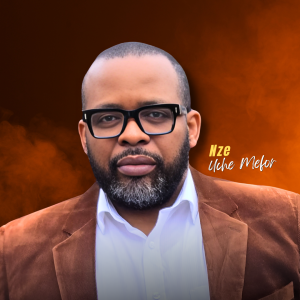
Uche Mefor is the Convenor of the Igbo-Biafra Nationalists and the Indigenous People of Igbo Nation for Self-determination