The South-East, the Igbo Nation, Alaigbo has a strong case for self-determination, and there are several compelling reasons to support their cause
1. Changing dynamics: The Biafra of 1967 to 1970 is not the same as the Biafra of today. The geographical configuration has changed, with the old eastern region is now divided into the South East and South South. Many states in the South South region are not willing to join in the restoration of Biafra, making it impractical to revive the old eastern region(Biafra) as it was in 1967. This necessitates a new approach that recognizes the realities of the present.
2. Realistic initiative: Given the unwillingness of other former component nations of Biafra to restore it, it is important to consider a more realistic initiative. It would be unfair to force a restoration that only the Igbo Nation desires. Instead, allowing each component nation to pursue its own self-determination and political status can lead to more meaningful progress and development for all.
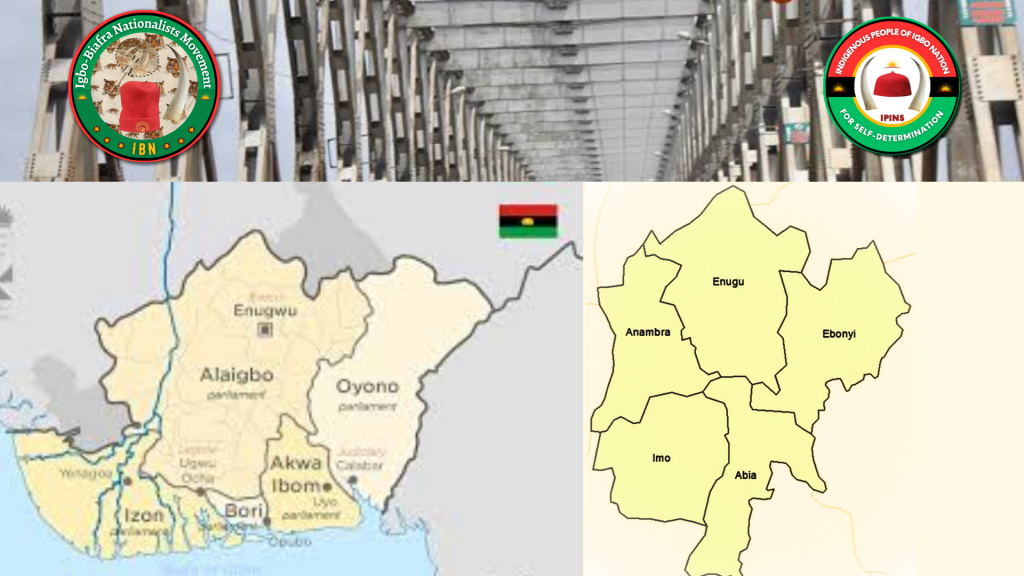
3. Self-determination for all: Embracing self-determination for each component nation acknowledges their unique aspirations and allows them to chart their own path towards political and economic development. Granting autonomy or independence to the South-East, the Igbo Nation, Alaigbo as well as other nations within the former Biafra, respects their right to determine their own future and fosters a sense of empowerment and self-governance.
4. Reduced territory does not negate self-determination: Even though the reality as we have it now is that not all the former component nations are willing to restore Biafra, it does not mean that the first Biafra Republic cannot be revived. The territory of the old eastern region may be adjusted or reduced, but this does not invalidate the aspirations of the Igbo people for self-determination. The focus should be on accommodating the desires of willing partners rather than fixating on maintaining the exact boundaries of the past.
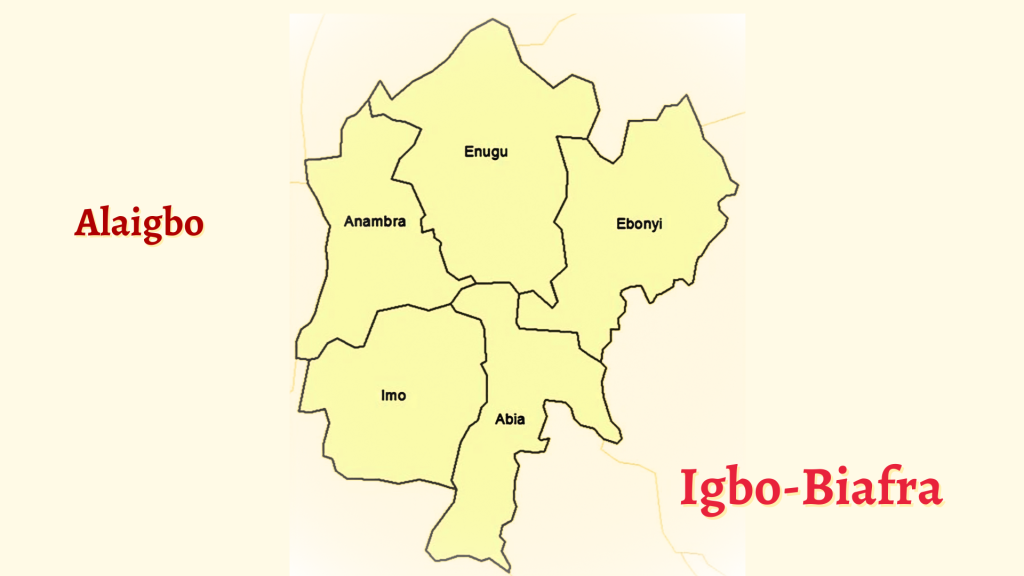
5. Diverse Biafran identity: The Biafran identity encompasses various ethnic groups, including Ijaw, Ibibio, Efik, and Anang, alongside the Igbo people. Acknowledging the individual paces of these groups in their pursuit of self-determination allows for a more inclusive approach. If and when the willing partners among these nations form a new alliance (subject to necessity), it can pave the way for a collaborative and cohesive Biafran nation, while respecting the unique identities of each group. Sadly, the possibility of this happening now is remote, hence the option we have on the table.
6. Meeting the criteria for statehood: The Montevideo criteria for statehood, including defined territory, permanent population, effective government, and capacity to engage in international relations, may pose challenges if the former component units of the old eastern region do not unite which is what is happening now. The people bearing the brunt of Biafra Restoration are the Igbo youths who are being extra-judicially incarcerated, if not murdered while our brothers in the South-South are applying delay tactics while these vibrant Igbo sons and daughters who represent the future are being mowed down in their numbers by the rogue security forces drawn from the rank and file of the unprofessional armed forces of the Nigerian state without consequences. The question is: for how long will the Igbo-Biafran youths die before our brethren in the south-south wake up from their slumber? Therefore, by focusing on the self-determination of the South-East, the Igbo Nation, Alaigbo, it becomes more feasible to meet these criteria and establish a stable and recognized, mono-linguistic state if and when the Igbos-Biafrans, the South-Easterners are willing and able to do so.
7. Marginalization and discrimination: The Igbo Nation has faced historical marginalization and discrimination within Nigeria. They have experienced state-sponsored economic and political marginalization, underrepresentation, fewer states and local governments, and the lowest revenue allocation among the regions in Nigeria. Self-determination would provide an opportunity to address these injustices and ensure equal rights and representation for the Igbo people.
8. Regional disparities: The South East region, predominantly inhabited by the Igbo people, has been allocated five states, while other regions in Nigeria have six states each. This disparity highlights the need to address the unequal distribution of resources and political representation. Self-determination would empower the Igbo Nation to advocate for fair and equitable treatment within Nigeria or establish their own political entity where they can determine their own affairs.
9. Individual component nations: The argument that those who died in the pursuit of Biafra freedom did not die for specific component nations but for Biafra as a whole is flawed. Before the adoption of Biafra as a name for the region’s sovereign status, the individuals were natives of their respective component nations. The unwillingness of other component units, fueled by the Nigerian state, aims to prevent the self-determination quest of Biafrans. Therefore, allowing individual component units to seek their own political status, economic development, and social progress in mutual respect and equality is the most viable solution.
In conclusion, supporting the self-determination of the Igbo Nation is a valid and justifiable cause. Recognizing the changing dynamics, embracing the aspirations of willing partners, and addressing historical injustices will contribute to a more inclusive and equitable society. By advocating for the Igbo Nation’s self-determination, we promote the principles of fairness, empowerment, and respect for diversity.
Uche Mefor writes as the convenor of the Igbo-Biafra Nationalists Movement and the Indigenous People of Igbo Nation for Self-Determination
#IgboBiafraNationalists #IBN #IPINS #UcheMefor #SouthEast #Alaigbo #SelfDetermination